GDPR DISCLOSURE

GDPR DISCLOSURE: SUP CALL currently does not collect your email address or any personal data. Frankly, we would not even know what to do with those data if we had them. We know how much you value your privacy and data security.

Friday, September 29, 2017

I HATE SUP CALLS: FROM A SUPERVISOR'S PERSPECTIVE

Call center agent, call center skills, call center training, sup call

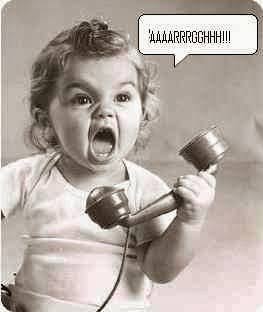
Please do not hate me for this but, I really hate sup calls. I'm sure I'm not alone. More often than not, sup calls result into DSATs that ruin my team's metrics. I especially hate it when a sup call resulted from someone else's fault and I take the flak. Damn. But it is what it is and sup calls are an essential part of a typical shift.

When I was an agent, I took every sup call as a challenge. Modesty aside, I take pride being able to de-escalate sup calls and even get  a few commendations handling my sup calls. And when I was made floor support, I gladly took that assignment as an even greater challenge. To me, it was management's validation of my "skill". Besides, I really loved wearing that bright orange vest floor supports wear.

When I became a sup, things changed a bit mainly because now, I need to manage the metrics of 20 reps on my team or I don't earn any bonus at all. Life was a lot simpler back when I only needed to take care of my own metrics. Although I still take sup calls as a supervisor, it seems I no longer enjoyed taking sup calls as I once did. And you need to understand your sup before you start talking behind your sup's back that your sup hates taking sup calls.

Let me put it this way: if your sup has 20 reps and each rep had one sup call and each sup call lasts 10 minutes, this amounts to over 3 hours your sup is not able to monitor your other calls. Over 3 hours that your sup could have spent coaching you and ensuring better metrics for the team. Metrics that amounts to bonuses for everyone. Instead, your sup is on the sup call.

So, as you can see, it's not that your sup hates taking sup calls. It's more like your sup hates the consequences being on the call instead of managing the team.

And thank heavens for floor supports! We would not know what to do without you.


Monday, September 25, 2017

Soft Skills: Turning Irate Customers Into Friends

Soft skills, call center agent, call center skills, call center training, call center resources

Modesty aside, one ability Daddy Jim has that helped him perform relatively well as an agent, floor support, and eventually supervisor is SOFT SKILLS. By effectively applying soft skills, Daddy Jim can often convert a call from an irate customer into a friendly conversation that ends well for both parties. A lot of times Daddy Jim even gets kudos from the customer and that all-important CSAT. Feels good, really.

Soft skills are a combination of intangible and non-quantifiable traits that enable one to interact and work well with others. Although there are a lot of these traits that fall under soft skills, we will focus our discussion on soft skills that you can use in a typical over-the-phone setting where the only tool you have is your voice and your demeanor while on the call.

And knowing that most of us have very short attention spans and probably will not finish reading this post in its entirety, we will, instead, cut this topic into easy to digest chunks, discuss a couple today and then continue on a later post. Fair enough? Let's start.

SOFT SKILL #1: THE TONE OF YOUR VOICE

The first 10 seconds of any conversation, whether face-to-face or over-the-phone, determines how the conversation is going to end. It doesn't matter if you're smiling ear to ear or if you're wearing a tie while on the phone, your customer can't see that (unless you're video conferencing). The picture that your customer sees in her mind is the image you project with your tone over the phone. If your tone sounds apathetic or insincere or tentative, your customer will perceive you as someone who cannot help her and most probably will ask to speak with someone else. Unless you plan on spending most of your shift every night side jacked with your sup listening to your sup calls, we suggest start with improving your tone.

Your tone should always be confident, clear and empathetic. Yes, we all know y'all are tired and it's not easy being bubbly the whole graveyard shift but that's what we're getting paid for.

It would be tremendously helpful to watch and listen to your fave Hollywood actors or actresses and sort of emulate how they talk. Hey, no kidding! As a matter of fact, because he has a deep baritone voice, every time Daddy Jim puts on his headset, he becomes George Clooney and his customers appreciate that, especially the ladies!

More soft skills on our next post. Feel free to leave a comment. More power!

RELATED ARTICLE: Soft Skills: Think Before You Speak

How to Handle Irate Customers on the Phone

Monday, September 18, 2017

I WANT TO SPEAK WITH AN AMERICAN REP!

Call center agent, call center skills, call center training, soft skills

How many times have you encountered a customer asking to speak with an American rep even before you finish your opening spiel? 

Although it may not be your fault, you are expected to de-escalate and at least try to make the customer feel that you are willing to assist since you already have the customer on the line. If your customer still insists, make certain you strictly adhere to your center's policy regarding returning the customer back to the queue and set your customer's expectations.

Anyway, this post is about why some US customers prefer to speak with US-based representatives. Trust is usually the primary reason, especially if the transaction involves providing personal info such as credit card and Social Security numbers. With scams and identity theft rampant with online and over-the-phone transactions, you really cannot blame them.

Another reason is difficulty communicating with non- native English speaking reps. Obviously, there are certain nuances that only a US-based rep can understand and appreciate. Most Americans don't have time to waste talking on the phone. Anything that adds to the customer's frustration such as incompetence, rudeness, or inability to communicate clearly will all add up to a bad customer experience that will make the customer ask to speak instead with a US-based rep.

Perhaps one more reason customers prefer to transact business with a US-based rep is the ease of doing business with someone on the mainland vis-a-vis someone off shore on the other side of the globe mainly because they feel a  US-based rep would be more familiar with how Americans think and talk.

To overcome certain bias against talking with an off shore rep, you should, first and foremost, exude confidence and trustworthiness in your tone at the onset of the call. Trying hard to sound stateside is nice but once your customer detects you are offshore (and they will, they're not stupid), doubt sets in and you can throw trustworthiness out the window. A  natural confident tone should be a good way to start a conversation.

Active listening is mandatory on each and every call. DO NOT MAKE YOUR CUSTOMER REPEAT WHAT THEY JUST SAID. Nothing irritates an American more than incompetence. Being tired or sleepy is no excuse for incompetence. If you feel you are in no condition to take the next call, notify your team lead right away. Better yet, make certain you get enough rest after shift. It is your responsibility to be in tip top shape for your shift. I hate being a party pooper but drinking after shift knowing you still have shift later tonight is IRRESPONSIBLE.
You should do your part to reverse the bias that customers are better off speaking with someone on the mainland. Look at it this way, if majority of Americans prefer to speak with an American on the mainland, how long do you think will you still have your job?

More power!