This Holy Week, let us take the opportunity to ponder over why, in the face of pain and difficulty, we never lose hope and still struggle to get up to do the work we need to do. Why, despite all the hardship and burden, we still persevere and refuse to give up. Why we all have to sacrifice so much for those we hold dear and continue to carry our Cross and to carry it well.
GDPR DISCLOSURE
GDPR DISCLOSURE: SUP CALL currently does not collect your email address or any personal data. Frankly, we would not even know what to do with those data if we had them. We know how much you value your privacy and data security.
Tuesday, March 27, 2018
Carry Your Cross and Carry it Well
Sunday, March 25, 2018
Should K-12 Grads Get a Job as a Call Center Agent?
Congratulations to the first batch of K-12 graduates! Now that they have finished senior high, these young grads have the option to choose between continuing on with higher education or to go get a job. One of the main objectives of shifting the Philippine educational curriculum to K-12 is to equip young grads who cannot afford to continue on to college with employable skills to help these grads get a job right away. Although a majority of these K-12 grads will opt to continue on to higher learning, some would probably choose to get a job upon finishing senior high so they can either start providing for their family or save enough money to continue with their education after working a few years. For K-12 grads who will opt to get a job, I pose this question: Should K-12 grads get a job as call center agents? How would these K-12 grads benefit from getting a job as a call center agent? This article aims to clearly answer these questions and help senior high grads make a decision whether getting a job as a call center agent is a good choice.
Why Choose To Get a Job as a Call Center Agent?
Whenever we make a decision, the first thing to consider is “what’s in it for me” or the WIFMs. Usually, after weighing the pros and the cons, we should then be able to decide which path to take. Allow me to present a few WIFMs K-12 grads can get when they opt to get a job as a call center agent:
College Grads Preferred But NOT Required
When the BPO and call center industry started in the Philippines way back in the early 90s, the hiring process for those who wanted to get a job in this sunshine industry was definitely tough requiring applicants to be college or university graduates and licensed practitioners in their respective fields of study. And this was necessary back then because the Philippines needed to put the best people on the job in order to attract more foreign companies to outsource to the Philippines and make the country the top destination for business process outsourcing and call centers. Today, although the hiring process for call center companies still ensures only the most qualified recruits get hired, the educational requirement has eased off a bit to a point where college undergraduates and even high school graduates with the right attitude and set of skills are encouraged to try out. This is mainly because developments in workforce training over the past several years had made training new recruits so sophisticated to a point where even undergraduates can easily understand and follow instructions. A plus factor for K-12 graduates is that they have invested two additional years in senior high mainly for the purpose of providing them with employable skills and work experience so that once they apply to get a job, they stand a much better chance of getting hired even without a college degree.No Experience? No Problem!
Today, due to the high demand for fresh recruits, most call center companies are putting more emphasis on an applicant’s willingness to learn than on experience. In fact, there are actually some call center companies that prefer applicants who had minimal or no prior work experience simply because it’s easier to mold fresh young minds that are open to new ideas and not bound by old habits and a fixed mindset. K-12 grads already had at least 80 hours On the Job Training as part of their curriculum. On top of this, grads who get a job as call center agents can expect paid classroom-type training specific to their account for at least a month to familiarize them with the account and the different customer relationship management (CRM) tools they will be utilizing plus a couple more weeks nesting on the operations floor to prepare them to take actual calls. New recruits are given ample classroom and live fire experience before they are assigned to their designated teams. Once in a team, further training and coaching are provided by the team leader and newbies usually will buddy up with tenured call center agents for support until they become more proficient on their calls.Above-average Pay and Benefits
I have always strongly believed that the call center industry is a great equalizer! Of course, getting a good education is important let me stress this fact but it is only in the call center industry where a college undergraduate or even a high school graduate can expect above-average pay, benefits and incentives that undergrads cannot expect to find in any other industry. And that’s a fact! On average, a front-line call center agent makes around PhP 18K-20K a month plus incentives and bonuses. Health benefits, paid training, career growth and other perks (free coffee!) are your proverbial icing on the cake. This was totally unheard of twenty or thirty years ago. In the days before there were call centers, if you never finished college, it would be difficult to get a decent-paying job, let alone a job that pays above minimum wages and benefits. Today, once you get a job as a call center agent, even without a college degree, you get the same above-average pay and benefits your other team mates get, yes even your team mates who have college degrees. Again, I’m not saying a college degree is not important. All I’m emphasizing here is that the call center industry is a great equalizer.Career Growth
In a call center, metrics is king! Call centers do not discriminate between graduates or undergrads, male or female, straight or gay, young or old, able-bodied or physically-challenged. As long as a call center agent has the right attitude, skill, proper work ethics, and able to consistently meet the site’s metrics, the agent can look at career growth in the industry and aspire to climb up the career ladder. I have seen call center agents barely a year on the account leap frog over more tenured agents and become supervisors and managers. I had the pleasure of working with a supervisor who worked his way up the ranks despite his physical disability to eventually become Call Center Manager. Personally, at the age of 50, most call center agents would consider me too old and over the hill. But age never stopped me from trying out and eventually becoming a supervisor. I had the privilege of developing at least sixty call center agents under my wing and spawning two new supervisors within my 2-year stint as a sup. Career growth will always be open even for young K-12 grads who have the heart and determination to grow and succeed in the call center industry.RELATED ARTICLE: Call Center Metrics
Gain Work Experience on a Global Level
Getting a job as a call center agent presents a unique opportunity for K-12 grads to experience what it is like to communicate and do business on a global level using the English language as the medium of communication. The young graduates would not only learn to improve their English communication skill but more importantly, learn the culture, nuances and temperament of their customers- what makes them happy, what upsets them, what to say and what not to say. The ability to communicate effectively in English and the experience gained working with customers overseas will definitely prove most useful should these senior high graduates decide later on to pursue other fields of endeavor, especially if their work requires them to do business with foreign principals or even if they opt to work overseas. On top of improving their communication skills, they also get to test their multi-tasking and IT skills in real world situations especially now that Artificial Intelligence is gradually being integrated into Customer Relations Management tools.Learn Skills You Probably Won’t Learn in School
The fastest way to develop a skill is to be immersed in that skill eight hours a day. In a call center, senior high grads will be learning a lot of skills that they probably won’t even learn in school. Skills they will learn over time and take with them wherever they go and whatever job they do. Skills like integrity, critical thinking, teamwork, perseverance, proper work ethics, self-discipline, a “never say die” attitude, time management, knowing when to speak and when to just shut up, managing stress, working under pressure, knowing how to take constructive criticism, workplace politics plus a whole lot more. Find me a curriculum in college that teaches these skills and I will enroll!RELATED ARTICLE: 5 Essential Call Center Skills You Won't Learn in College
Fun! Fun! Fun!
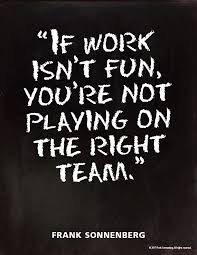
This is the one thing I miss the most after I resigned from my call center job. Despite all the difficulties and stress a call center agent goes thru every shift, the call center, in general, is a fun place. For K-12 graduates, it’s just like being back in your classrooms again only this time, you’re getting paid while having fun! You meet new friends and beautiful people! You join teambuilding activities and competitions! You get rewards and incentives for a job well done! You get to learn and earn! Stress and challenges will always be present in whatever job you choose but you won’t have half as much fun as you will in a call center. Take my word for it. Man, if I was only 30 years younger I’d probably be glamping or mountain climbing or spelunking or pigging out at a seafood buffet or have fun just simply being with the team!Enough said. I’m pretty sure there are a dozen other reasons why a young senior high grad should go get a job in a call center but if these WIFMs here aren’t enough to convince him, then maybe he should consider other options. A call center job is not for everyone. Let’s be clear with that. Ironic as this may sound, the work is challenging yet monotonous at the same time. And of course, he has to deal with the thought of working nights while everyone at home is asleep and then trying to sleep in the daytime while everyone around the house is up and about. If, after weighing the pros and the cons, our K-12 grad still wants to get a job as a call center agent, great! He can go ahead and check online JOB POSTING SITES or have a friend or family already working in a call center refer him to recruitment. Good luck!
This article was written with K-12 grads in mind but just about anybody interested to get a job as a call center agent can definitely benefit from this. I hope you enjoyed reading this post as much as I enjoyed writing it. Let me know your thoughts by leaving a COMMENT below. That would be nice. It would be even nicer if you can help me SHARE this article so that your friends and their friends can benefit from this article as well.
Thank you for spending time with SUP CALL. Have a wonderful day.
Tuesday, March 20, 2018
English Language Idioms Call Center Agents Need To Know
Call center agents are tasked with taking care of customer concerns, doing their best to make sure every transaction results in a positive customer experience. For offshore call centers, the expectation obviously is that call center agents can speak English relatively well. For offshore call center hubs like Manila and Mumbai where English is practically the second language, speaking English well shouldn’t be a problem. However, despite this fact, a lot of customers still insist on speaking with someone else or being transferred to a locally-based representative mainly due to one reason: Customers prefer speaking with a native speaking rep. This article will help you converse with your customer like a native speaking call center agent through the appropriate use of English language idioms.
You Don’t Sound Native
Whenever a customer tells you that you don’t sound like a native English speaker, the customer doesn’t necessarily mean you don’t speak English well but rather you’re not familiar with English language idioms and expressions most native English speakers are quite used to. Although having an accent definitely helps, being a native English speaker requires more than just imitating English slang and accent. Customers aren’t dumb and they can certainly see through the farce of using a fake accent. This tends to be irritating and puts a call center agent’s credibility and honesty into question. It is better to speak English in your natural tone and just spice up the conversation with English language idioms your customer is familiar with. Most American customers are already aware about offshoring and outsourcing and that they are actually talking with a call center agent located halfway across the globe. Usually, they won’t mind talking with a call center agent from Manila or Mumbai as long as the call center agent and the customer can effectively communicate on the same wavelength. It is only when the call center agent fails to speak on the same level as the customer that not sounding native becomes an issue. Do not expect the customer to adjust to the call center agent’s English communication level. On the contrary, it is the call center agent’s responsibility to turn his English communication skill up a notch and be familiar with common English idioms and expressions to communicate effectively with the customer like a native English speaker.What Are English Language Idioms?
The CAMBRIDGE English Dictionary defines idioms as a group of words in a fixed order that have a particular meaning that is different from the meanings of each word on its own. MIRRIAM-WEBSTER adds idioms are a form of language peculiar to a people, or to a district, community or class. WIKIPEDIA says an idiom is a common word or phrase with a culturally understood meaning that differs from what its composite words’ denotations would suggest. Taking all these definitions into consideration, we can say that an English language idiom is a form of English speech or expression peculiar to a geographic or cultural group where the words taken together has a completely different meaning from the individual definitions of each word in the phrase. English language idioms are not to be taken literally. For example, the English language idiom “more than one way to skin a cat” may sound rather cruel if taken literally but all it means is “there’s always a way around every problem”. Thankfully, this English idiom has absolutely nothing to do with cats and no cats were harmed (or skinned) in the making of this idiom. While there are English language idioms unique only to certain geographic or cultural groups, there also are idioms common to practically every one. This article will deal mainly with the more common English language idioms that non-native speaking call center agents will find most useful in their every day calls.Why Learn English Language Idioms?
English language idioms separate native English speakers from other call center agents who basically just know how to speak English. Again, the ability to speak English well is not enough to make one a native English speaker. English language idioms provide color to an otherwise plain and boring English conversation. Call center agents need to learn English language idioms and use them appropriately to be able to converse with their customers like native English speakers. The customer is probably aware she’s talking with a call center agent offshore but she would not mind that fact as long as she is at ease talking with a native sounding speaker. Using English language idioms and sounding native gives customers the impression that you are familiar with their situation and are in a better position to understand and resolve their concern. This is the main reason why customers will usually ask to speak with somebody else when they feel the call center agent handling them does not “talk their language”. The ability to use English language idioms appropriately gives call center agents that much needed advantage to immediately strike rapport with the customer and talk with them more confidently. A word of caution: use English language idioms only when appropriate and make certain you know exactly what each idiom actually means. You do not want to open a “can of worms” using English language idioms inappropriately. Don’t overdo your idioms. Using the wrong idiom at the wrong time is much worse than not using any idiom at all.How to Learn English Language Idioms
I’m almost certain there must be thousands of English language idioms being used everyday in the English-speaking universe and I will make it clear right now that I will not attempt to discuss each one of these idioms. We will just focus our attention to a handful of common English language idioms that I have used personally and know will be most useful to call center agents. But don’t let me stop you from learning more English language idioms. As I always say: “Never stop learning.” There are a number of ways you can learn English language idioms effectively:Search Engines:
Google the term “English language idioms” and immediately you have well over 7.5 Million search engine results about English language idioms available for your consumption; Searching for “English Idioms for Business” gives you a mind-boggling 33.7 Million search results! Suffice to say, there’s a ton of information on English language idioms available on Google;YouTube:
As of this writing, there are well over 160 thousand videos on YouTube on topics related to English language idioms and English idioms for business;
English Language Idioms YouTube Video
Movies & Television:
Every time you watch an English movie or television program, make a conscious effort to note down any English language idiom you hear and try to Google those idioms to know what they actually mean. You might also want to try and emulate how they delivered those idioms. You might want to leave out profanities and other colorful expressions which you are bound to encounter depending on the movie or program you’re watching;Your Customers:
You are on the phone listening to different customers at least 40 hours a week. If that isn’t immersing yourself in English language idioms then I don’t know what is. Make every call a learning experience for you. If you’re allowed to use pen and paper on the operations floor, by all means note down any English language idiom you hear your customer say then Google them later. If you can learn even one or two English idioms per day that would be at least ten new idioms you can add to your arsenal of English language idioms every week.
25 English Language Idioms I Love to Use
As mentioned earlier, since there are practically thousands of English language idioms being used every day, this part of the article will just focus on idioms I have personally used in my conversations with customers. Modesty aside, I had customers tell me they thought I was in the US or something along that line. I take this as a validation that I probably sounded native to them. Of course, I always tell them I’m offshore but they don’t seem to mind that at all. To my customers, what mattered most is we were “on the same page” and we clearly understood each other. I’m sorry I’ve been “beating around the bush” up to this point so I’m not going to delay any longer. Let’s “get the ball rolling”. Here are 25 of the English language idioms I love to use:- Rule of thumb: a generally accurate guide or principle based on experience
- Go the extra mile: to go beyond what is expected to please a customer
- Call a spade a spade: to be blunt and truthful
- Cost an arm and a leg: very costly or expensive
- Hit the nail on the head: to be accurate or correct
- Bitter pill: to accept an unpleasant situation
- I’m all ears: to listen intently or focus on what the customer is saying
- Best of both worlds: a win-win situation; customer gets all advantages
- Call it a day: to stop working or to end a task
- A silver lining: be optimistic there is still hope
- Hit two birds with one stone: to accomplish two tasks at the same time
- Step up to the plate: to take action when something needs to be done
- The whole nine yards: give the customer everything
- You can say that again: Yes, I totally agree with you
- Straight from the horse’s mouth: to get information from a reliable source
- Ball’s in your court: it’s the customer’s turn to act or make a decision
- Barking up the wrong tree: blame the wrong person or look at the wrong place
- In a pickle: to be in a difficult situation
- Between a rock and a hard place: to be faced with two equally difficult choices
- In the same boat: an empathy statement meaning you’ve been there yourself
- Be on the same page: to understand each other
- Let’s shake on that: to reach an agreement with the customer
- Get the green light: get approval for a customer’s request
- I got you covered: to take care of everything for the customer
- Get the big picture: the general, overall or long-term plan
Additional Resources and Credits
If you had fun with these 25 English language idioms and thirsting for more, I highly recommend these following links where you can find more English language idioms you can use in your calls:- 20 Essential English Idioms for Sounding Like a Native
- English Language Idioms for Business
- English Language Idioms
- LinguaMarina ESL Video
Thank you for spending time learning how English language idioms can help you. Hope this article empowers you to become a better native English speaker and be more confident conversing with your customers. If you found this article most useful, I would love to see you COMMENT or SHARE.
Subscribe to:
Posts (Atom)